Faith, Governance, and the Cost of Deflection: Why Madagascar Needs Policy, Not Prayer
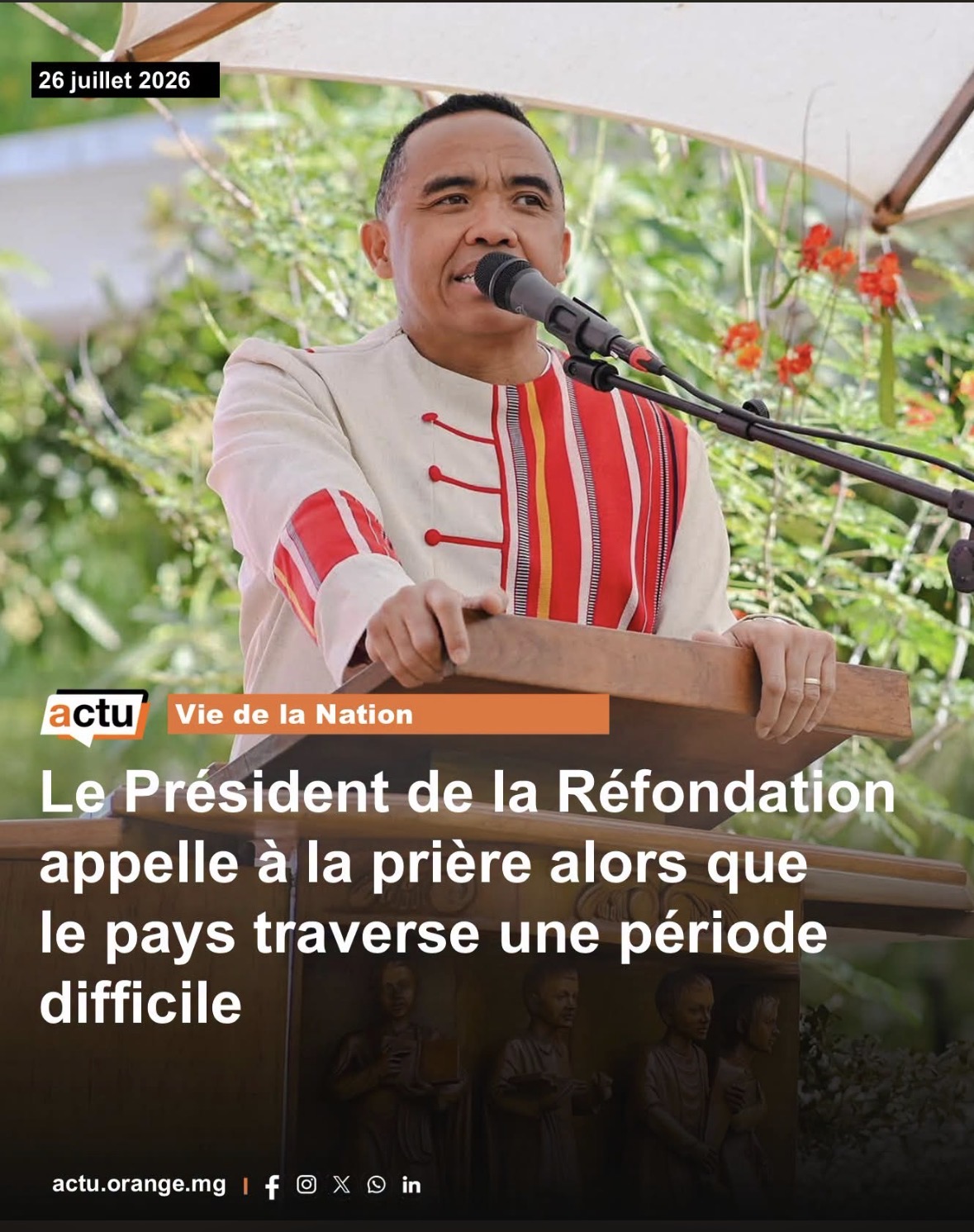
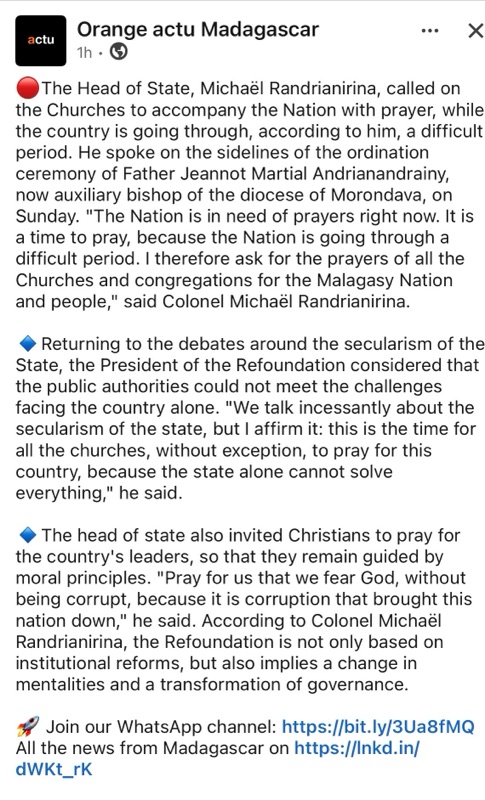
This appeared in my feed and I was a somewhat surprised and I was spurred on to write this post.
In the face of mounting national challenges—from the persistent budget deficits and the non-payment of public servants to the recent climate of instability in Antananarivo—the response from the highest levels of authority has taken a turn toward the spiritual. Recent statements by Colonel Michaël Randrianirina, suggesting that "public authorities cannot solve the country’s challenges alone" and calling for a return to God, have sparked significant debate.
While faith is a cornerstone of Malagasy society, there is a dangerous line between personal belief and state administration. When leaders frame national crises as spiritual failings rather than policy failures, they are not just expressing piety—they are engaging in a calculated deflection of accountability.
The Rhetoric of Moralization
By shifting the burden of reform from tangible institutional changes to abstract personal morality, the current narrative suggests that if only leaders were more "God-fearing," systemic corruption and economic mismanagement would simply evaporate. This is a convenient, if not dangerous, simplification. It ignores the structural incentives that make corruption pervasive and the bureaucratic inefficiencies that stall business operations.
When the government suggests that the "secularism of the State" is an obstacle to progress, it signals a move away from the objective, data-driven governance required to stabilize an economy. It effectively tells the public that their material suffering—the unpaid teacher, the struggling healthcare worker, the small business owner strangled by red tape—is a matter for prayer, rather than a matter for which the current administration should be held accountable.
The Economic Reality
My research into Madagascar’s economy has consistently pointed to a different set of solutions:
* Tax Reform: We need a transparent, efficient system to eliminate the budget deficit, rather than relying on the hope that moral reform will somehow increase revenue.
* Anti-Corruption Measures: Corruption is deeply tied to domestic revenue collection. This requires legislative oversight and digital, auditable systems—not just a call for leaders to "fear God."
* Business Environment: Economic stability requires easier, predictable business operations, not political rhetoric that keeps the focus on abstract values while the actual mechanisms of the state remain broken.
Conclusion: A Call for Secular Solutions
If Madagascar is to navigate its current fragility, it must prioritize secular, structural reforms over spiritual appeals. Accountability is not a religious virtue; it is a fundamental requirement of a functioning democracy.
As we look toward the future, we must ask: Are we waiting for divine intervention to solve our problems, or are we prepared to demand the hard, often tedious work of policy reform that actually changes lives?


Comments
Post a Comment