Navigating the Challenges: Wages and Reforms in Madagascar's Economy. Part Twenty- Corruption
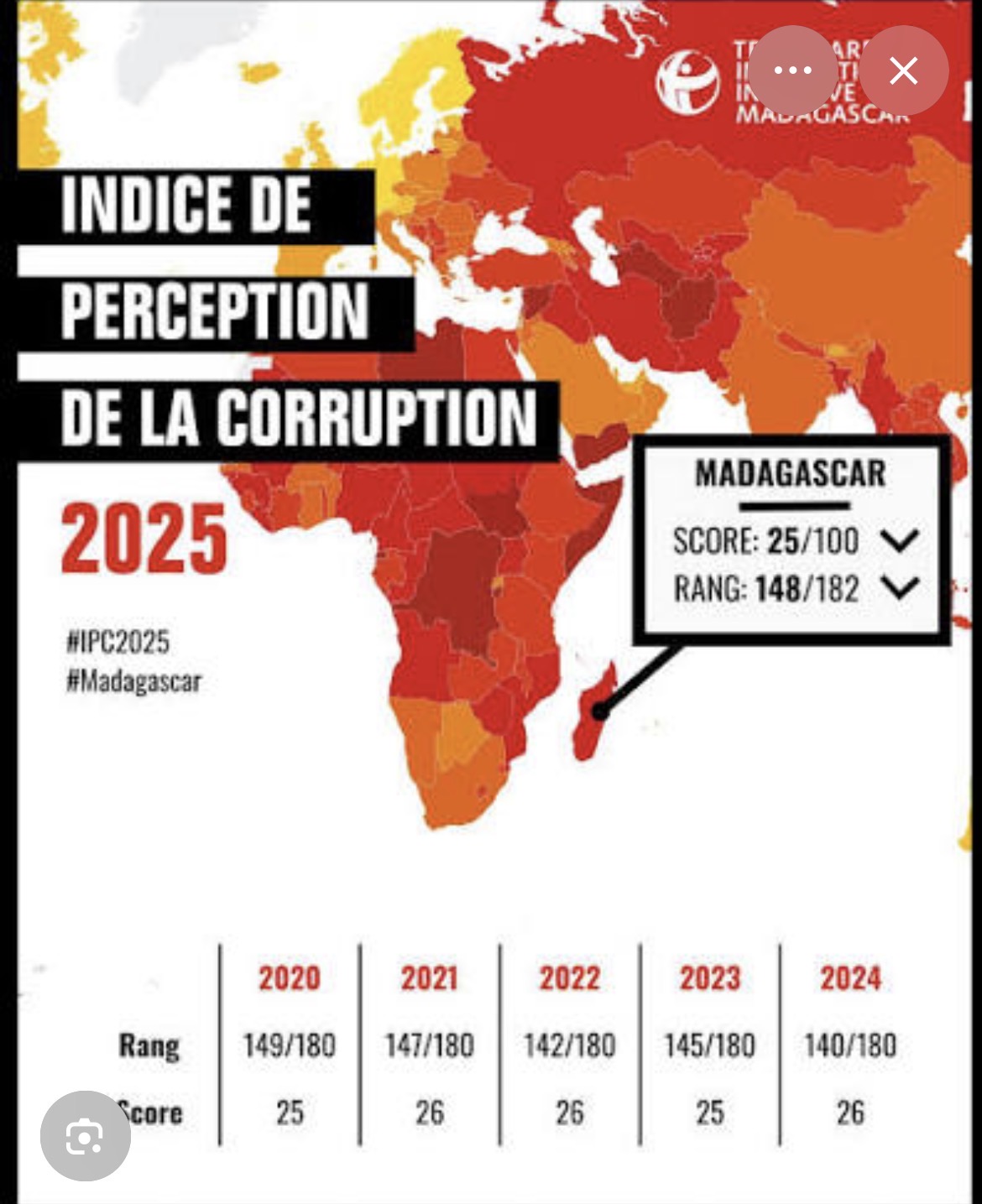 The Paper Wall: When Legislation Meets Reality in Madagascar
In my time here in Antananarivo, I have learned that there is often a vast, visible distance between what is written in the law and what happens on the street. We have seen the government introduce new legislation, anti-corruption bureaus, and reform agendas. On paper, the framework for a functioning, rule-of-law society exists. But for those of us living and working here, the reality feels very different.
Corruption in Madagascar is not just an occasional occurrence; it is a deep-rooted feature of the system. It has become a "hidden tax" that every citizen pays, but it hits hardest those who have the least.
The Institutional Barrier
When we talk about the economic challenges of this country—the struggle to pay teachers, the underfunding of clinics, the difficulty of doing business—we cannot ignore where the money is being lost.
The institutions designed to protect the public are often the very places where the system breaks down:
* The Police: For many, the police are not seen as the first line of security, but as a source of uncertainty. When the enforcement of the law becomes a transaction rather than a service, the entire concept of public safety is undermined.
* The Judiciary: A fair and independent judicial system is the bedrock of any stable economy. Yet, when justice is perceived to be for sale, businesses lose confidence and citizens lose hope. If contracts cannot be enforced and rights cannot be defended without "extraordinary" costs, investment stalls and the informal economy becomes the only safe harbor.
* The Prison System: Perhaps the most heartbreaking aspect is the state of our prisons. Far too often, they become holding pens for those who could not afford to pay their way out of the system, while those with influence remain untouched. This is not just a failure of justice; it is a failure of humanity.
The Economic Cost of Corruption
In my previous posts, I’ve argued that we need to streamline business regulations to help our economy grow, reform the tax system. But regulations mean nothing if they are applied selectively. Corruption creates an uneven playing field that rewards the well-connected and punishes the honest entrepreneur, the dedicated teacher, and the struggling healthcare worker.
It siphons off the resources that should be funding our schools and hospitals. When we ask why public services are failing, we are often looking at a budget deficit. But we should also be looking at the deficit of integrity within the institutions that manage those funds.
The Path to Change
Legislating against corruption is the easy part. Changing a culture where corruption is the "default" way of getting things done is the work of a generation.
It starts with acknowledging the reality. We cannot solve a problem we are afraid to name. It requires a society that demands transparency not just from the top, but at every level of interaction—from the local station to the highest court.
I know that writing about this feels risky, and living through it feels exhausting. But as someone who cares deeply about the future of this country, I believe we owe it to the next generation—to the students in our classrooms and the patients in our clinics—to speak clearly about what is holding Madagascar back.
I want to hear from you. How have you seen these systemic issues impact your own life or work? Is there any space for optimism in the current climate, or are we stuck in this cycle? Let’s keep the conversation honest.


Comments
Post a Comment