Navigating the Challenges: Wages and Reforms in Madagascar's Economy. Part Ten - Madagascar’s total borrowing.
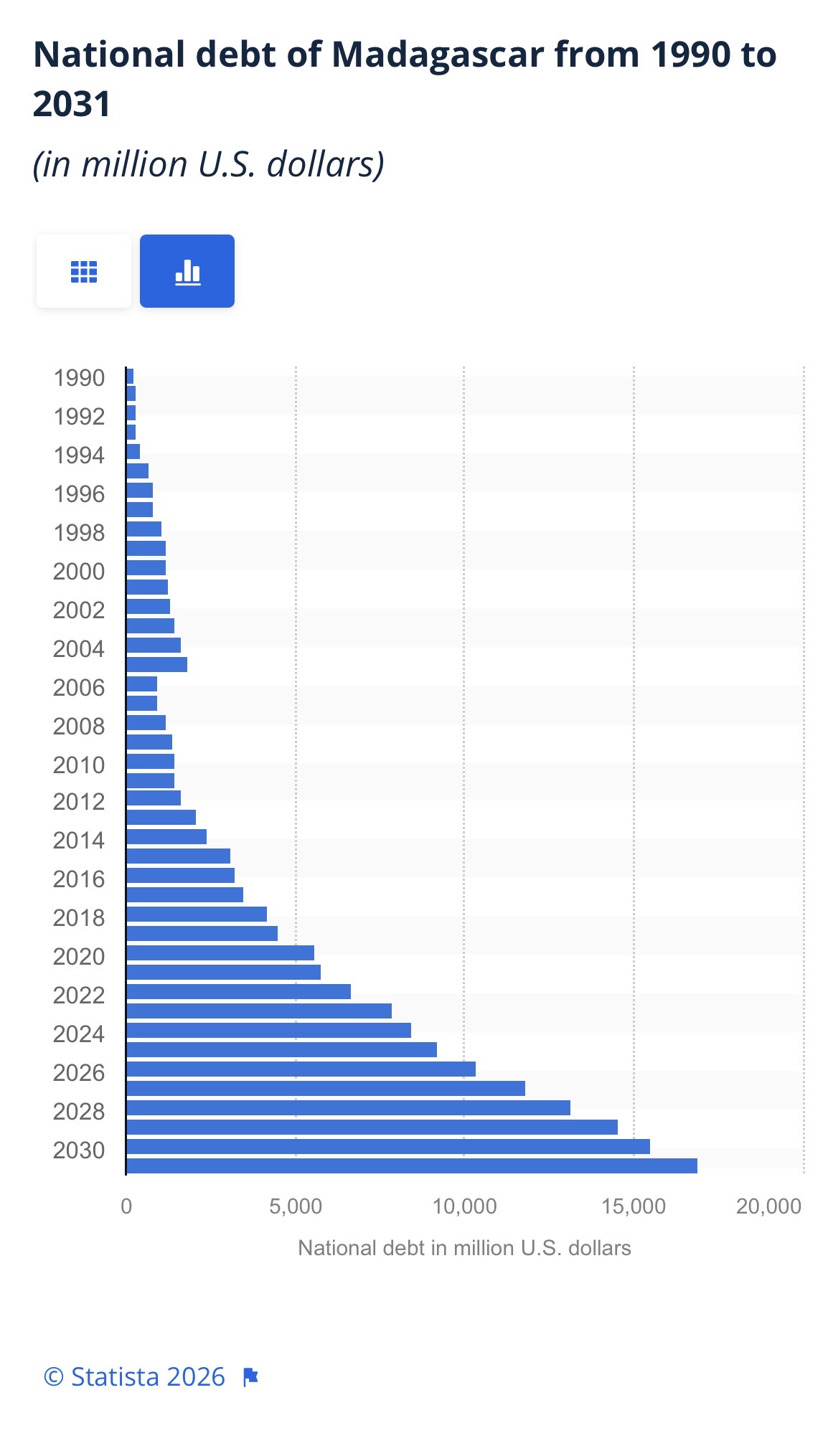 Madagascar's total borrowing from various countries and international organizations includes a mix of concessional loans, commercial loans, and grants. Here’s a breakdown of the borrowing amounts, interest rates, and securities, and a comparison with lenders like the IMF:
Total Borrowing Overview
1. IMF:
- Total Borrowed: SDR 620.19 million (approximately US$830 million) as of March 31, 2026.
- Interest Rates: The IMF typically offers low-interest rates under its Extended Credit Facility (ECF) and Resilience and Sustainability Facility (RSF).
- Security: Loans are backed by the country’s commitment to implement agreed-upon economic policies and reforms.
2. World Bank:
- Total Commitments: Approximately US$9.99 billion as of February 28, 2026.
- Interest Rates: Generally low, especially for IDA loans, which are concessional with interest rates around 0.75% to 1.5%.
- Security: Loans may be secured by government guarantees and are often tied to specific projects.
3. African Development Bank:
- Total Borrowed: Specific outstanding amounts may vary, but it is one of Madagascar's main multilateral creditors.
- Interest Rates: Typically concessional rates for development projects.
- Security: Loans are secured through government guarantees or project financing.
4. Chinese Loans:
- Total Borrowed: Estimates suggest several hundred million dollars, with figures ranging from US$300 million to US$700 million over the years.
- Interest Rates: Generally lower than commercial rates, but can vary by project; often between 2% and 5%.
- Security: Loans may be secured against specific infrastructure projects or natural resource revenues.
5. Other Bilateral Loans:
- Total Borrowed: Official bilateral loans were reported at US$78 million in 2023.
- Interest Rates: Varies significantly depending on the lender.
- Security: Typically secured through government guarantees.
Comparison of Borrowing
- Proportion of Borrowing: The IMF’s lending is significantly smaller compared to the total commitments from the World Bank and the amount borrowed from China and other bilateral lenders.
- Debt Composition: Madagascar’s external debt is heavily weighted towards concessional multilateral finance, which is more favorable than commercial borrowing.
- Interest Rate Advantage: Loans from the IMF and World Bank generally have lower interest rates compared to loans from bilateral sources like China, which can have higher rates depending on project specifics.
Implications
- Sustainability: The mix of concessional loans helps maintain manageable debt levels, but the growing reliance on bilateral loans, particularly from China, raises concerns about long-term sustainability.
- Economic Stability: The overall composition of Madagascar’s debt reflects a reliance on multilateral institutions that support economic reforms, but it also highlights vulnerabilities associated with bilateral loans that may not always align with sustainable development goals.
Madagascar has borrowed extensively from various sources, with the IMF providing a smaller but crucial portion of concessional finance. The terms of borrowing differ significantly between lenders, affecting economic stability and debt sustainability.
To mitigate the risk of corruption and ensure that loans are used effectively, several mechanisms and practices are often implemented by lenders. Here are some key strategies:
1. Conditionality and Policy Requirements: Lenders often attach specific conditions to loans, requiring borrowers to implement governance reforms, anti-corruption measures, and transparency initiatives as part of the agreement.
2. Regular Monitoring and Reporting: Borrowing countries are required to provide regular progress reports and financial statements. This oversight allows lenders to monitor the use of funds and ensure they align with the intended purposes.
3. Independent Audits: Some agreements mandate independent audits of projects funded by loans. These audits assess the financial management and use of funds, helping to identify any irregularities.
4. Capacity Building: Lenders often provide technical assistance to strengthen the financial management and governance capacities of borrowing countries, helping them to better manage public funds and reduce opportunities for corruption.
5. Public Access to Information: Transparency initiatives may require that loan agreements, project details, and financial reports be made publicly accessible, allowing citizens and civil society organizations to hold governments accountable.
6. Collaboration with Civil Society: Engaging civil society organizations in monitoring projects can help ensure that funds are used appropriately and that projects meet the needs of the community.
7. Risk Assessments: Lenders conduct risk assessments before approving loans to evaluate the potential for corruption and mismanagement. This process can inform their decisions on whether to proceed with funding.
8. Integrated Approaches: Many lenders adopt integrated approaches that combine financial support with technical assistance, governance reforms, and capacity-building initiatives to create a comprehensive framework for sustainable development.
By implementing these mechanisms, lenders aim to promote transparency, accountability, and good governance, ultimately reducing the risk of corruption and ensuring that loans contribute effectively to economic development.


Comments
Post a Comment