Navigating the Challenges: Wages and Reforms in Madagascar's Economy. The Conclusion.
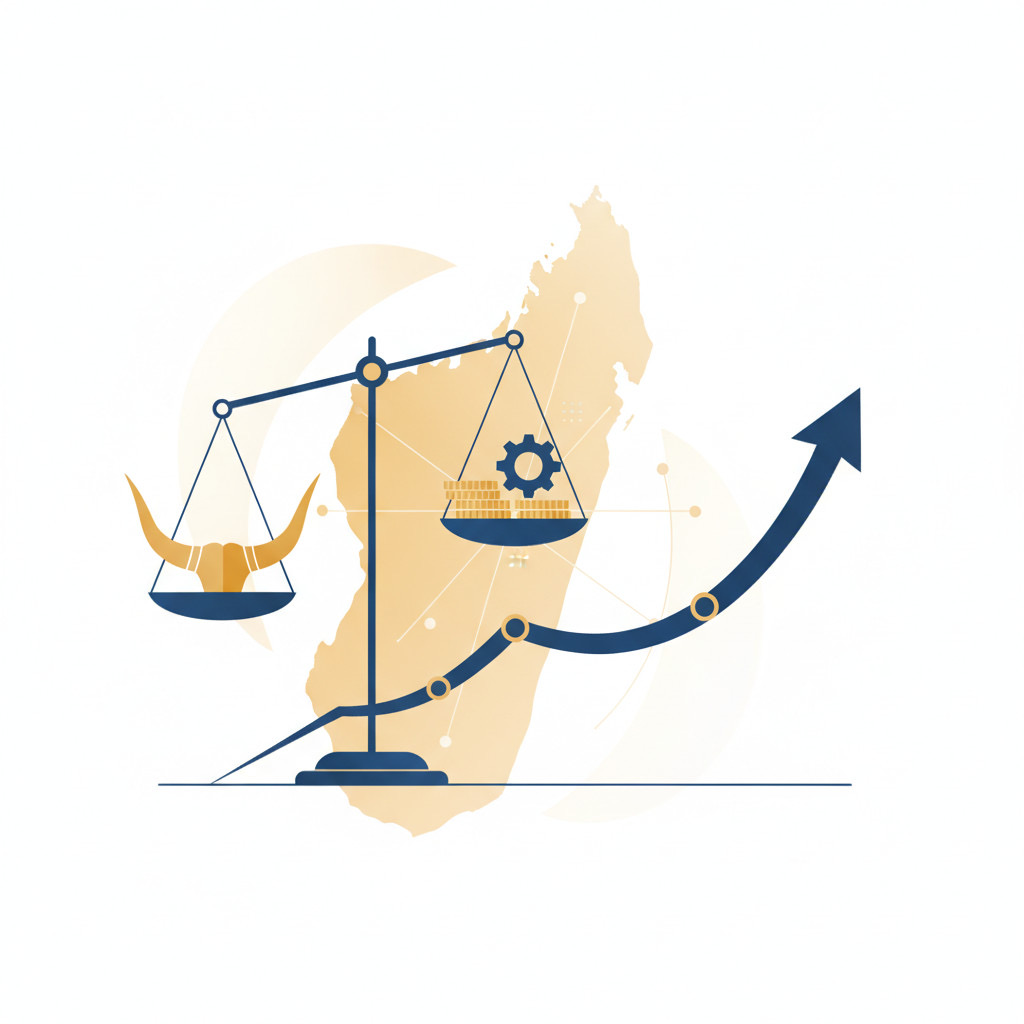 This series of twenty blogs has been an exploration of the complex, often contradictory, economic landscape of Madagascar. From the mechanics of remittances and the weight of international debt to the granular realities of tax reform and the corrosive impact of corruption, we have looked at the country not just as a set of statistics, but as a living, breathing system struggling to find its footing.
As I conclude this series, three central themes have emerged as the pillars upon which the future of Madagascar’s economy rests:
1. Corruption as a Structural Tax
The analysis consistently returned to the idea that corruption is not merely a moral failing; it is an economic barrier. When domestic revenues are siphoned away or mismanaged, it acts as a regressive tax on the most vulnerable. It creates a "cash flow" crisis that prevents the state from meeting its most basic obligations—most notably, the timely payment of teachers and healthcare workers. Eliminating this is not just about transparency; it is the prerequisite for a functional state.
2. Productivity as the Engine of Growth
We have seen that capital injections—whether through IMF loans or foreign investment—cannot compensate for a lack of domestic productivity. Real, sustainable growth requires an environment where business is easy to conduct and where the labor force is supported. When the brightest minds in education and healthcare are left without resources or security, the nation’s human capital is effectively being devalued.
3. Tax Reform as the Path to Sovereignty
Perhaps the most critical takeaway is that Madagascar’s path to stability lies in its own hands. Relying on external debt or sporadic remittances is a temporary measure, not a strategy. Comprehensive tax reform—broadening the base, simplifying compliance, and ensuring that collected funds actually reach the public sector—is the only way to break the cycle of deficit and dependency.
A Final Thought
The "Tales of Madagascar" are often stories of resilience. Despite the current climate of fear and the immense challenges facing the nation, there is a clear roadmap for progress. Economic stability is not a mystery; it is a matter of political will, structural discipline, and a collective commitment to prioritising the public good over private gain.
Thank you for following along on this journey. While this series of twenty blogs concludes here, the story of Madagascar’s economic development is ongoing. The hope is that by identifying these challenges clearly, I contribute, in some small way, to the conversation that will eventually lead to the change this country so richly deserves.


Comments
Post a Comment