The Pyramid of Accountability: Why Change Must Start at the Neighbourhood Level
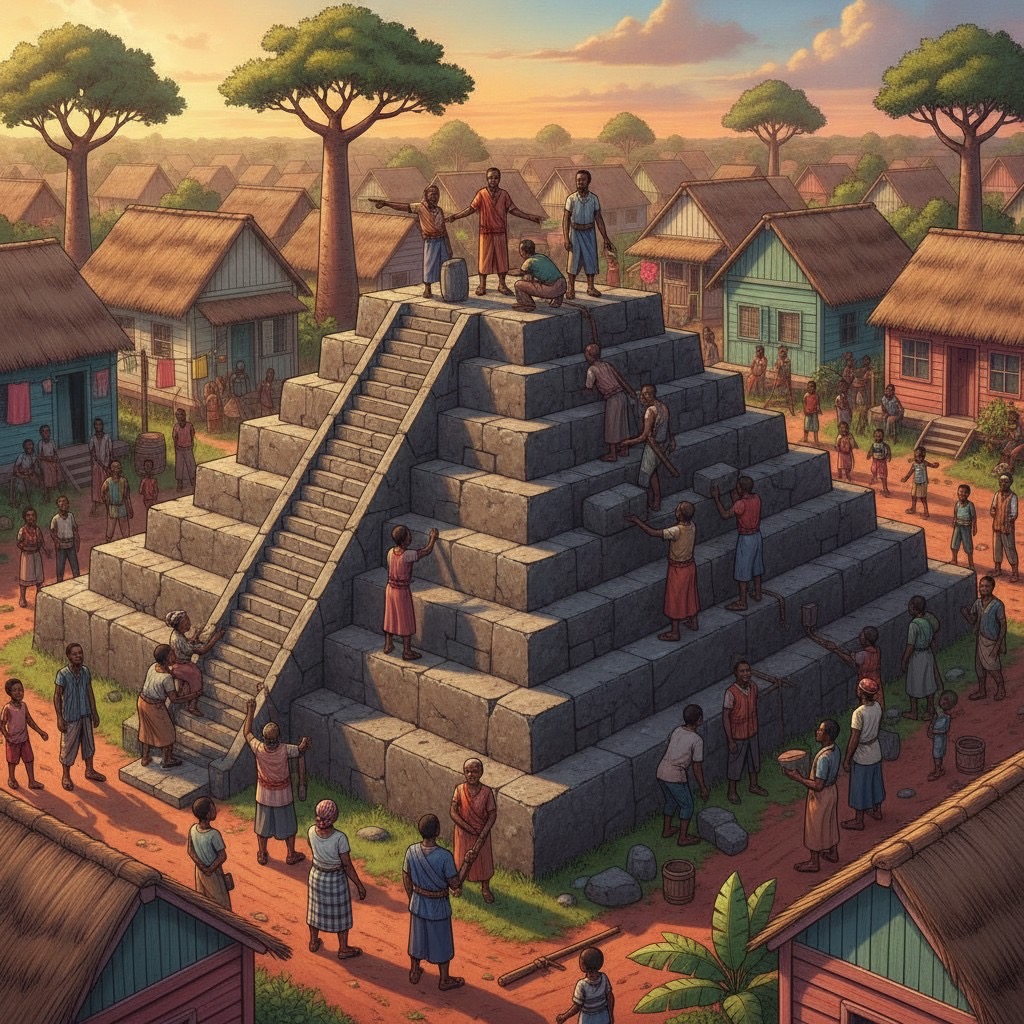
In discussions about the future of Madagascar, a common refrain often emerges: "We need a strong leader to fix this." I recently had a fascinating conversation with the president of a local association here in Antananarivo, and my friend argued that, given the current state of affairs, the country might be better off under a dictatorship. It is a sentiment born of frustration—a reaction to the persistent inability of our current structures to deliver basic services, from reliable infrastructure to the timely payment of public servants.
But I find myself disagreeing. A "strongman" model assumes that the rot is only at the top, and that a firm hand can simply sweep away systemic inefficiencies. I believe the opposite is true: the failure of the presidential model is a symptom of a deeper, structural disconnect. The real, sustainable change this country needs cannot be handed down from a palace; it must be built upward, like a pyramid, starting at the neighbourhood level.
The Governance Vacuum
Currently, our governance is top-heavy. Policies are drafted in high-level offices, but they rarely translate into tangible results on the ground. When the state is distant, it becomes an abstraction—a source of taxes to be avoided or a target for patronage.
True democracy is not just about casting a vote every few years; it is about the daily exercise of responsibility and accountability within our own communities. If we want to see change, we must look to the fokontany. When a neighbourhood takes ownership of its own governance—when residents demand transparency in how local funds are managed and hold their local leaders accountable for the state of their streets and the quality of their local clinics—the entire structure of the nation begins to shift.
Subsidiarity as an Economic Strategy
This is more than just a political philosophy; it is an economic necessity. I have written extensively about the budget deficits that cripple our public services, and how corruption often stems from the lack of oversight in domestic revenue collection.
When governance is localized, the "leakage" that currently siphons off resources becomes much harder to hide. If a community is directly involved in the management of its own basic services, the feedback loop between tax contribution and service delivery becomes visible. When people see their contributions actually turning into results, trust is restored. And where there is trust, there is a foundation for the kind of consistent economic environment that businesses need to thrive.
Building the Pyramid
The "pyramid of accountability" is the antithesis of the current, fragile status quo. A government that loses its grip on its people because it fails to deliver is inherently unstable, regardless of how much power it concentrates at the centre.
By fostering democratic practices at the grassroots level, we do not just improve local services; we build a more resilient nation. We create a citizenry that is not waiting for a saviour to descend from the capital, but one that is actively constructing the future of their own neighbourhoods.
The "left vs. right" ideological debates that define politics in more stable nations are a luxury we cannot afford. Here, the divide is far simpler: it is between those who maintain the status quo and those who are willing to do the hard work of building accountability from the ground up.
It is time we stopped waiting for the pyramid to be built from the top down. It is time we started laying the bricks ourselves.
Join the Conversation
If we agree that the current top-down model is failing to deliver basic services, what is the single most important step we can take to shift power back to the community? Is it demanding transparency in local tax spending, or perhaps creating new platforms for youth to participate in municipal policy?
I am currently compiling a list of practical, grassroots-led reforms for my next piece. Send me your ideas or leave a comment—let’s move the conversation from "what is wrong" to "how we fix it."


Comments
Post a Comment