Why Madagascar’s Wage Bill Needs More Than Just a Budget Adjustment
In my recent deep dives into Madagascar’s economy, I’ve often looked at the "big numbers"—the budget deficits, the IMF loans, and the weight of our national debt. But behind those cold, hard statistics lies a human story that is becoming increasingly difficult to ignore: the state of our public-sector pay.
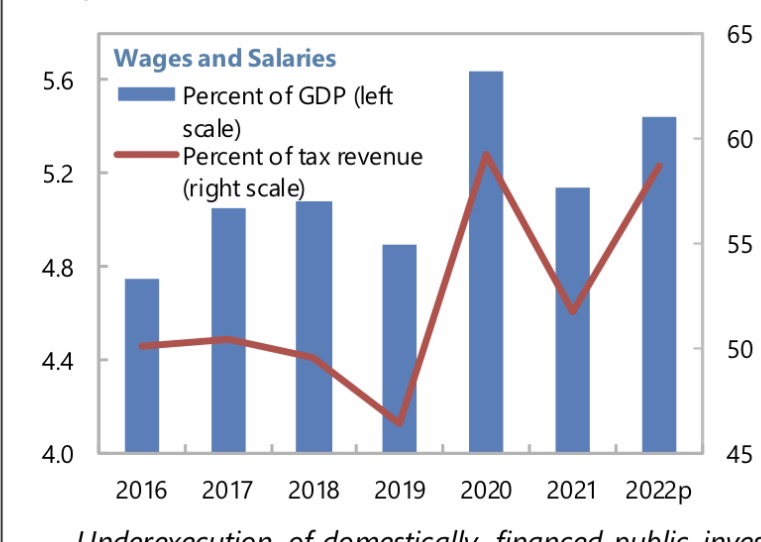
When I look at the numbers, Madagascar isn't an outlier compared to other low-income countries. The wage bill, at roughly 5% of GDP, sits right where you’d expect for an economy of Madagascars size. But look under the hood, and the picture changes. When you measure that same wage bill against our tax revenue, it’s a different story—one that explains why so many of our essential workers, particularly teachers and healthcare staff, face persistent delays in payment.
The Balancing Act
In 2022, the government’s compensation bill reached nearly 60% of total tax revenue. When more than half of every Ariary collected in taxes goes straight to salaries, there is precious little left over to actually equip those teachers with books or those clinics with medicine. It’s a fiscal trap: we are paying for a civil service that the current tax base struggles to support, leaving the very people who deliver essential services underfunded and, all too often, underpaid.
Why Reform Isn't Just "More Money"
The temptation is to argue for a blanket pay rise. But given the current state of the coffers, a simple increase without structural reform would likely just deepen the cash-flow crises that lead to those dreaded payment delays.
Real reform, as suggested by international observers and common sense, needs to be surgical:
* Transparency and Payroll Integrity: Madagascar needs to know exactly who is on the payroll and why. Cleaning up the data is the first step toward ensuring that the money actually reaches the people on the front lines.
* Simplifying the Structure: Our current system is laden with complex, often opaque allowances. A shift toward a simpler, more predictable salary structure would make it easier to manage and, more importantly, easier to pay on time.
* Targeted Support: Instead of broad, unsustainable hikes, we should be prioritizing those in the most critical, hard-to-fill roles—the teachers in our rural districts and the healthcare workers in our underserved communities.
The Human Cost
As I’ve written before, corruption and mismanagement are not just abstract problems for the Ministry of Finance; they are the reasons a teacher in a remote village might go months without seeing their salary. If the government cannot guarantee the basic, timely compensation of its most vital employees, it risks not just a budget crisis, but a total breakdown of the social contract.
We need a system that treats public service as a priority, not an afterthought. Until we fix the plumbing of our payroll, we will continue to see the same cycle of frustration and instability.


Comments
Post a Comment