The Architecture of Agency: Understanding Liberal Democracy
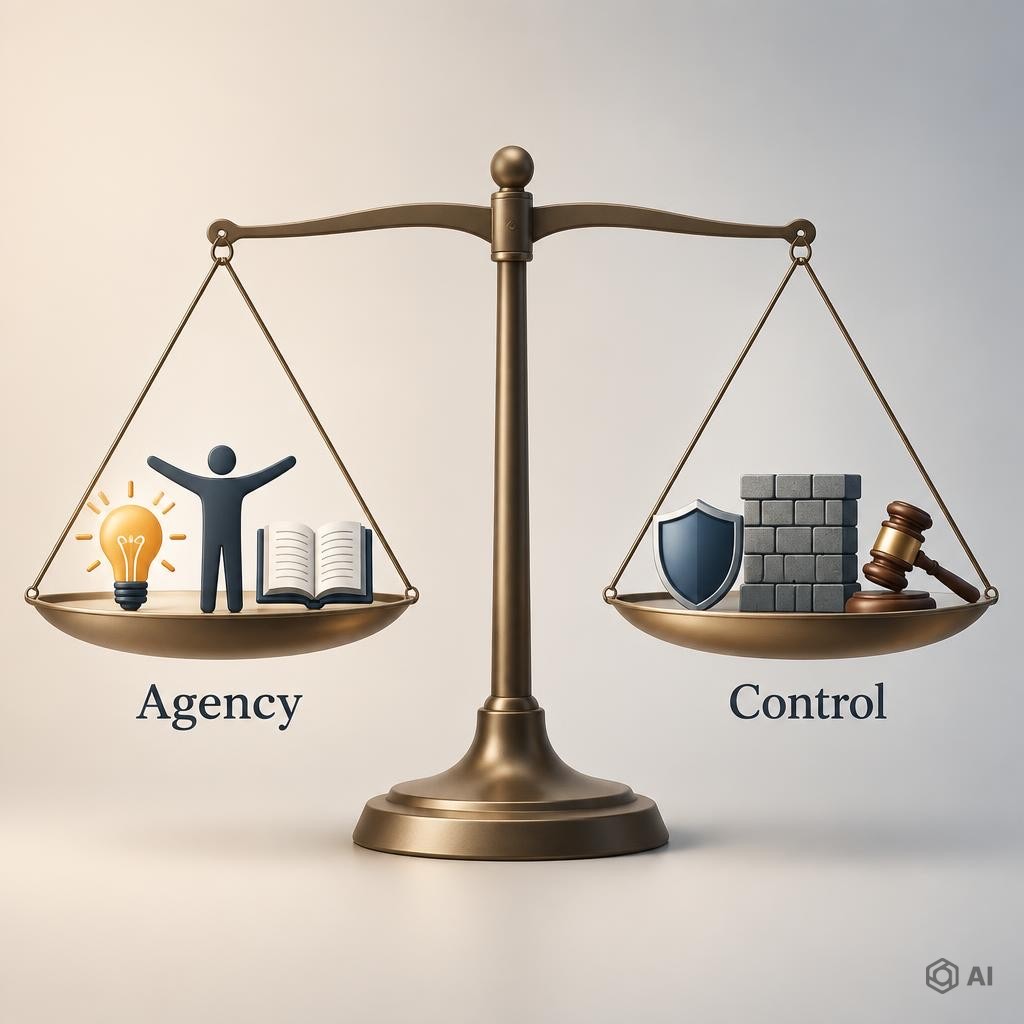
In our introduction, we defined the political spectrum by the tension between Agency—the individual's capacity to act—and Control—the state's capacity to direct.
To understand where other systems go, we must first understand the "gold standard" of the modern era: Liberal Democracy. It is a system specifically engineered to maximize individual agency, even if that makes the state's job of governing more difficult.
The Core Logic: Power by Design
Liberal Democracy is not just about voting; it is about limiting the state. The "Liberal" part of the name is the most important for our framework: it refers to the protection of the individual from the state’s potential for total control.
 Checks and Balances: By splitting power between the executive, legislative, and judicial branches, the system makes it impossible for any one person to gain total control. This creates "friction," which protects individual agency from being crushed by a single, unchecked authority.
 The Rule of Law: In this model, the law is a neutral referee. It applies to the leader as much as it applies to the citizen. This provides the predictability needed for individuals to build businesses, plan for the future, and exercise their agency without fear of arbitrary state interference.
 Accountability as a Feedback Loop: Elections are the ultimate "Agency Check." They allow the public to signal when the state has overstepped its bounds or failed to serve the people's needs.
The "Agency" Benefits
When this system works, it creates a high-trust environment where:
 Innovation flourishes: Because citizens know their rights are protected, they are more willing to take risks, start businesses, and express new ideas.
 Correction is peaceful: When the state tries to exert too much control, the system provides legal and political avenues to push back.
The "Control" Trade-Off
However, we must be honest about the cost of this agency. Because the system is designed to prevent total control, it often suffers from:
 Legislative Gridlock: It is difficult to get anything done when every decision must be debated, checked, and balanced.
 Short-Termism: Leaders, constantly looking toward the next election, often prioritize immediate public favor over the long-term structural reforms that a country might desperately need.
Why This Matters for Our Series
By starting here, we set the benchmark. When we later look at Burkina Faso, we can ask: What agency did they lose to gain the "speed" of their current regime? When we look at Madagascar, we can ask: Is the system actually protecting individual agency, or is it just a façade for informal control?
Liberal Democracy is the "Agency-First" model. As we move through the rest of the series, we will see how other nations are constantly negotiating whether that level of individual freedom is a luxury they can afford—or a necessity they are fighting to reclaim.


Comments
Post a Comment