The Hybrid Reality: The Trap of the "Façade" System
In our series, we’ve looked at the "Agency-First" model of Liberal Democracy and the "Control-First" pivot in Burkina Faso. Now, we turn to a system that often confuses observers because it tries to be both: the Hybrid Regime, with Madagascar as our primary case study.
The Hybrid Paradox: Formal Democracy, Informal Control
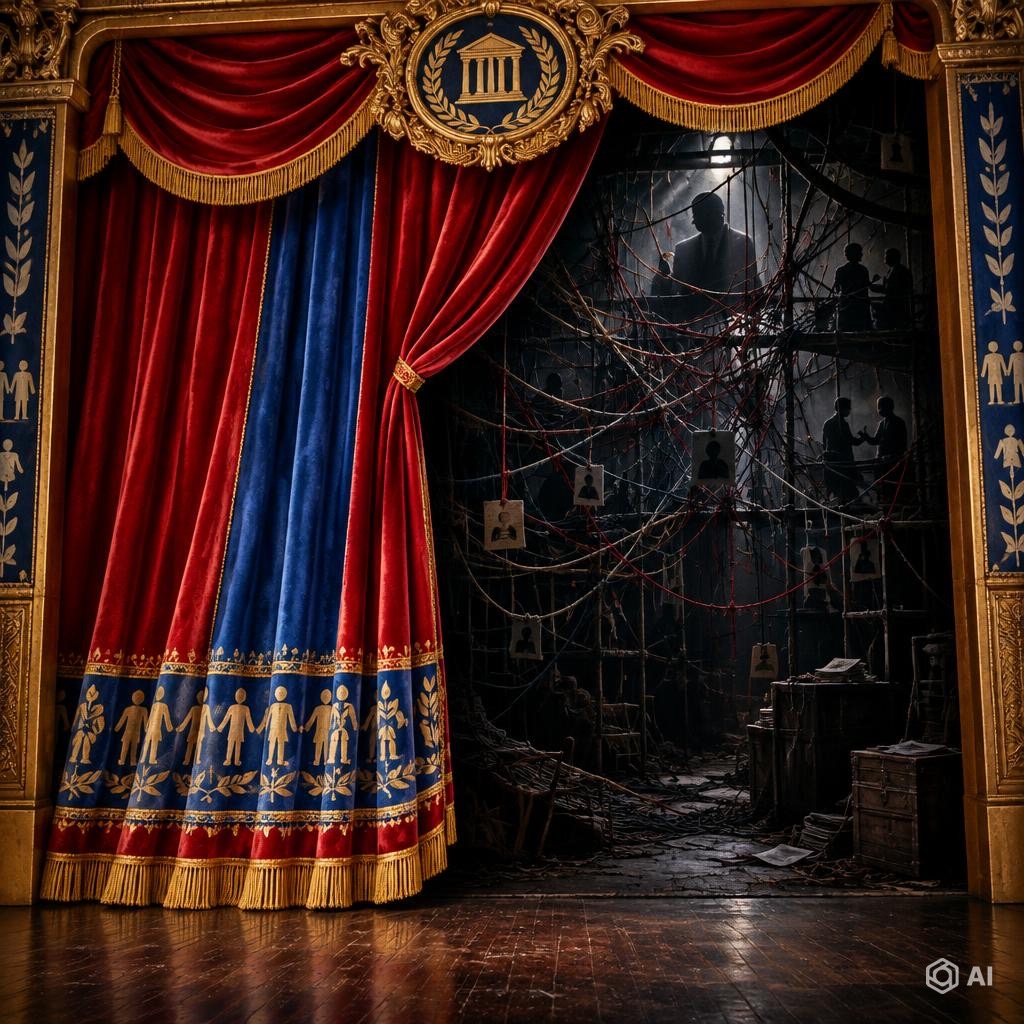
A Hybrid Regime is like a stage play where the script says one thing, but the actors are following a different set of rules entirely. On paper, these systems have the trappings of a democracy: elections, a parliament, and a constitution. But in practice, the real levers of power are held by informal networks, patronage, and personal loyalties.
* The Façade of Agency: The system looks like it empowers the individual through the ballot box. Citizens are told they have the power to choose their leaders.
* The Reality of Control: In reality, the "Agency" of the average person is severely limited. Real influence is reserved for those within the "inner circle"—the connected elite who can navigate the patronage networks. For everyone else, the system is designed to be just open enough to prevent total collapse, but just closed enough to prevent real, structural change.
The "Spiritual vs. Structural" Gap
In my previous work on Madagascar’s economy, I’ve often highlighted the gap between the state’s rhetoric—the "spiritual" promises of national progress—and the reality of economic stagnation. Using our Agency vs. Control framework, we can now see why this happens:
* Rhetoric as Control: The state uses nationalistic or idealistic rhetoric to maintain the façade of a functioning democracy. It keeps the population focused on the "big picture" to distract from the lack of actual agency.
* Structural Decay as a Tool: When you look at the difficulty of implementing tax reform or simplifying business operations in Madagascar, it isn't just "incompetence." It is a feature of the system. If the system were truly transparent and efficient, the informal networks that hold power would lose their influence. Therefore, the "messiness" of the economy is actually a form of Control.
The Hybrid Trap
Unlike Burkina Faso, where the state has openly centralized control, Madagascar’s hybrid system is "sticky." It is harder to reform because it doesn't give you a clear "strongman" to challenge. Instead, you are fighting a ghost—a system that claims to be democratic while systematically eroding the structural foundations that would allow citizens to act independently.
* The Risk: The population is kept in a state of perpetual "waiting." They are waiting for the next election, waiting for the promised reform, waiting for the economy to turn around. This waiting is a form of passive control.
* The Reality: The real tragedy of the hybrid system is the denial of agency. It convinces people that they have a voice, but then denies them the structural tools (like a fair tax system or an accessible business environment) to actually change their lives.
The Path Forward
If Burkina Faso’s challenge is to avoid the "trap" of total control, Madagascar’s challenge is to break through the "façade" of hybridity. The path to agency here isn't just about "more democracy"—it’s about structural honesty. It’s about demanding that the institutions on paper actually match the reality of the street.
As we conclude this series, we have to ask: Is it better to have a system that openly demands your submission (Burkina Faso), or one that promises you freedom while quietly siphoning away your power (Madagascar)?


Comments
Post a Comment