The Sovereignty Pivot: Why Some Nations Trade Agency for Strength
In our first post, we defined Agency as the individual’s power to act and build, and Control as the state’s power to direct and constrain. We established that while Liberal Democracy is built to maximize agency, it is often perceived as messy, slow, or vulnerable to outside influence.
But what happens when a population feels that their individual agency is no longer productive? What happens when they feel that the democratic process is not a vehicle for freedom, but a mask for corruption or external interference?
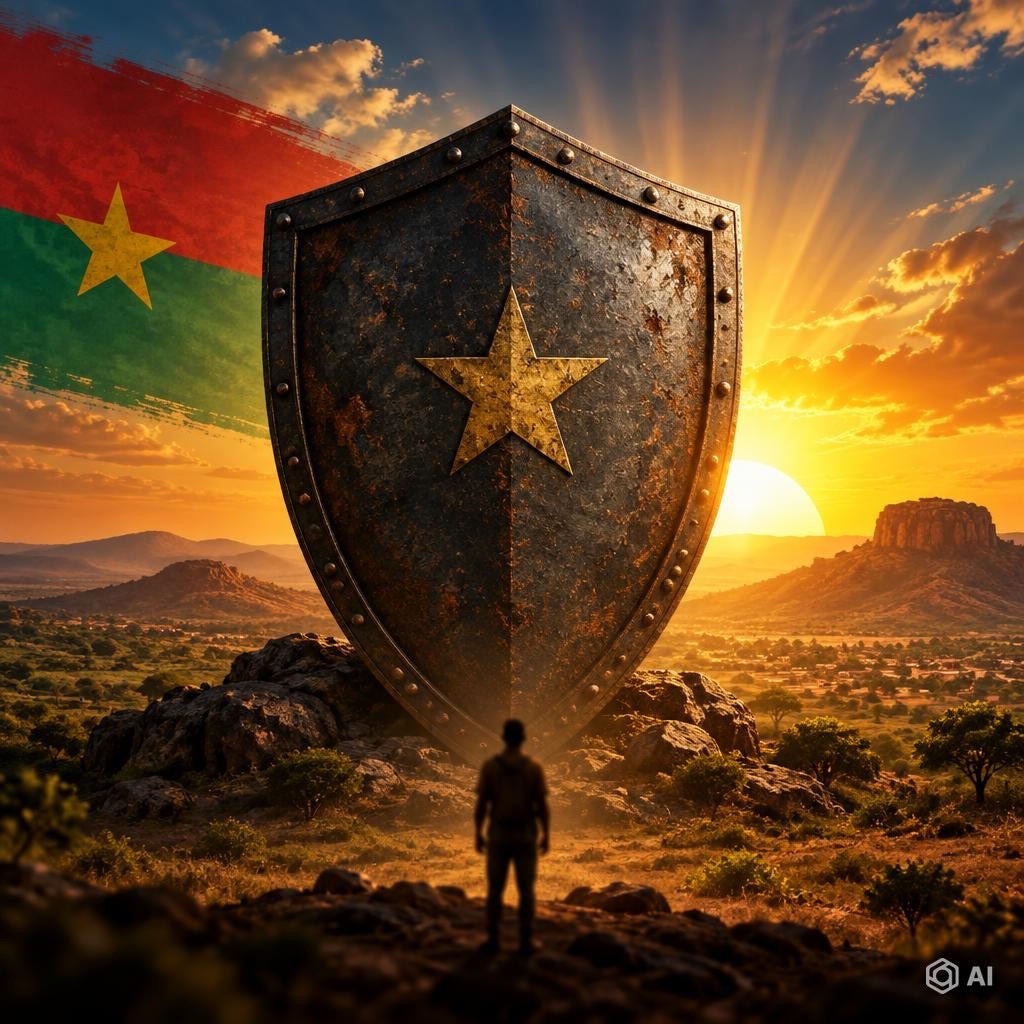
Burkina Faso offers a striking case study in what we might call the Sovereignty Pivot.
The Trade-Off: Safety and Pride vs. Individual Agency
The current transition in Burkina Faso is not just a change in leadership; it is a fundamental shift in the nation’s political "currency." By moving away from competitive democratic models, the regime has made a deliberate choice to prioritize collective strength over individual political participation.
* The Cost: The suspension of political parties, the restriction of opposition, and the heavy centralization of power represent a massive surrender of individual agency. The ability to dissent, to organize, and to influence the state from the bottom up has been effectively paused.
* The Gain: In exchange, the state offers collective agency. By taking an aggressive, anti-colonial stance—specifically against the influence of France—the government frames the nation as a unified, sovereign actor. For many citizens, this "national agency" feels more tangible and protective than the fragmented, often ineffective "individual agency" they experienced under previous systems.
The "Strongman" Logic
The logic here is seductive: We are too weak to be free.
When a state faces existential threats—whether from insecurity, economic fragility, or perceived foreign interference—the demand for Control often skyrockets. The regime justifies its existence by promising to "cleanse" the state and restore pride. It argues that individual rights are a luxury that can only be enjoyed once the state is strong enough to defend its own borders and resources.
This is a powerful narrative. It transforms the act of submission into an act of patriotism. In this framework, questioning the government is no longer seen as a democratic right; it is cast as an act of sabotage against the national mission.
The Critical Question
As observers, we have to look past the rhetoric of "national strength" and ask the hard question: Is this a temporary trade, or a permanent trap?
* The Risk: When you trade individual agency for state control, you are betting everything on the competence and benevolence of the current leaders. If the state fails to deliver on its promises of security and prosperity, the people have no mechanism—no elections, no free press, no opposition—to hold that power accountable or to pivot toward a new solution.
* The Reality: We must ask if the "sovereignty" gained is actually being used to build structural reforms that empower citizens, or if it is simply being used to consolidate power for a new elite.
Burkina Faso is currently testing a bold hypothesis: that a nation can find its footing by closing its doors to foreign influence and tightening its grip on domestic life. Whether this leads to a new era of national resilience or a long-term stagnation of human potential remains the central question of our time.
In our next post, we will turn to Madagascar to see how a "hybrid" system navigates these same forces, but with very different results.


Comments
Post a Comment