Beyond Putin’s Binary: Choosing Partners, Not Patrons
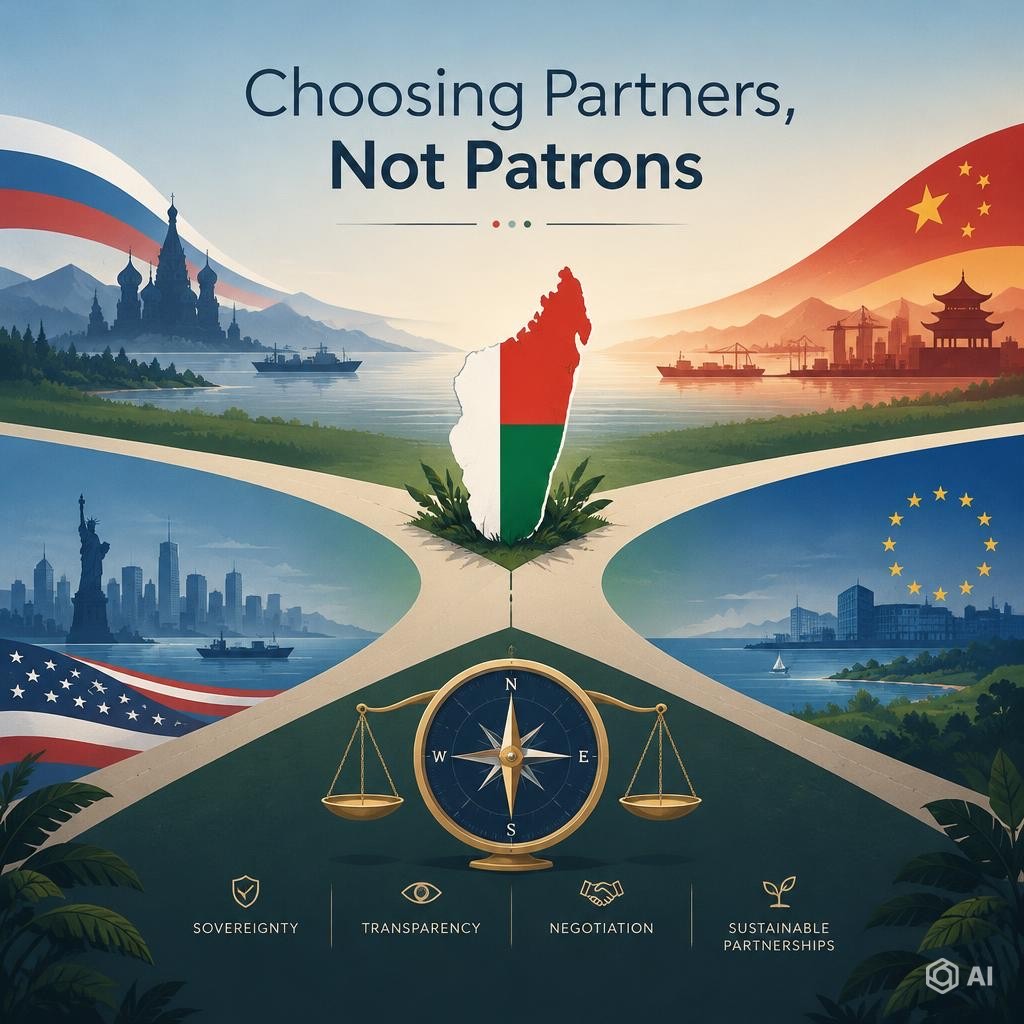
Vladimir Putin has argued that Russia is a better partner for the Global South than the “colonial West.” It is an attractive message, especially for countries that remember colonial domination, unequal trade and Western interference.
But the choice is not as simple as Russia versus the West. China and the United States cannot be ignored, and no major power acts purely out of generosity.
Russia presents itself as a defender of sovereignty. It usually avoids demanding political reforms or openly criticising the internal affairs of partner countries. It offers military cooperation, diplomatic support and, in some cases, access to natural resources. For governments that dislike Western conditions, this can appear attractive.
However, non-interference does not necessarily mean equality. Russian partnerships can also be opaque and heavily focused on security, political influence and resources. A government may gain short-term protection while the wider population sees little improvement in employment, education or living standards.
The Western powers have a deeply complicated record. Colonialism was not merely a historical episode; its economic and political consequences continue to influence many countries. Western governments and institutions can also impose conditions that are presented as assistance but sometimes feel like control.
At the same time, the West offers access to large markets, technology, education, finance and humanitarian support. Its institutions may be demanding, but some demands—such as transparency, accountability and sound public finances—can benefit citizens when applied fairly.
China represents another form of partnership. It has financed roads, buildings, telecommunications and other infrastructure across Africa. Chinese cooperation is often less concerned with political reform than Western aid. This can give governments greater freedom of action.
But Chinese investment is not charity. It is linked to commercial and strategic interests. Contracts may be difficult for the public to examine, local businesses may receive limited benefits, and debt or resource agreements can create new forms of dependence.
The United States remains important because of its influence in finance, technology, security and international diplomacy. Yet American policy is also shaped by strategic interests. Its language about democracy and human rights is not always applied consistently.
The real lesson is that no great power should be treated as a permanent friend—or a permanent enemy. Russia, China, the United States and Europe all seek influence. They may use different language, but each expects something in return.
For countries such as Madagascar, the wisest policy is not to replace one dependency with another. It is to work with several partners while protecting national interests. That requires transparent contracts, parliamentary oversight, local employment, technology transfer and clear public benefits.
Madagascar should not have to choose between Western paternalism, Russian influence, Chinese dependency or American pressure. Its objective should be more practical: to negotiate with everyone while becoming dependent on no one.
The question is therefore not whether Russia is morally better than the West. The question is whether any partnership strengthens the sovereignty, prosperity and agency of ordinary citizens.
A country should choose partners—not patrons.


Comments
Post a Comment