Media Sovereignty or a Change of Influence?
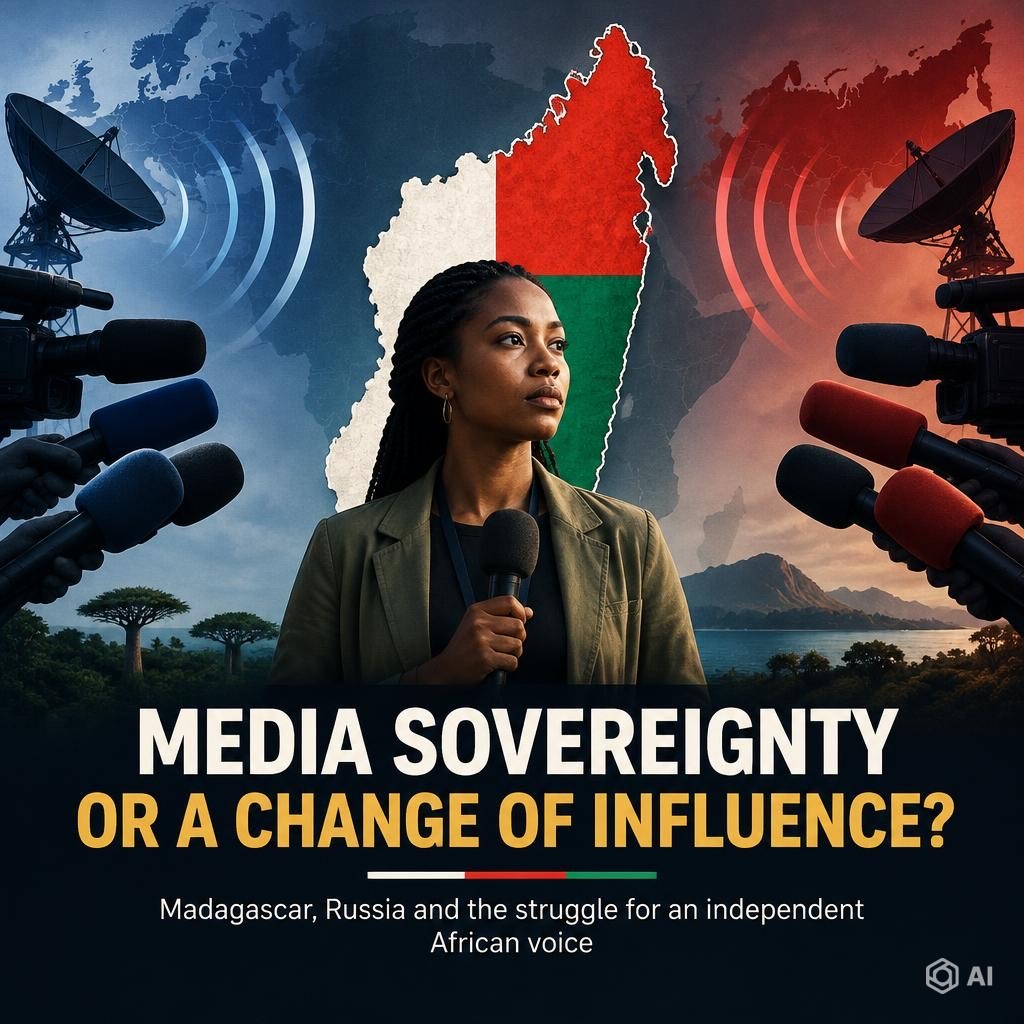
A recent statement attributed to Madagascar’s President of the Refondation, Colonel Michaël Randrianirina, reportedly called on Russia to help Madagascar confront the influence of European media in Africa.
The appeal raises an important question: what does media sovereignty really mean?
There is a legitimate concern about the dominance of foreign narratives. African countries have often been described, analysed and judged through European media institutions. These outlets may focus on instability, poverty, corruption and political failure while giving less attention to local perspectives, achievements and aspirations.
Africa certainly needs stronger media institutions capable of telling its own stories. Madagascar needs journalism that reflects Malagasy experiences and allows Malagasy citizens to make their voices heard internationally.
But seeking Russian support creates an obvious contradiction.
Russia is not widely regarded as a model of independent journalism. Its media environment is strongly influenced by the state, and critical voices face serious restrictions. If Madagascar responds to European influence by inviting Russian influence, it may simply be exchanging one external narrative for another.
That is not necessarily media sovereignty. It may be a change of influence.
True media sovereignty should not mean replacing European media with Russian media. It should mean developing independent Malagasy and African journalism—professionally credible, financially sustainable and free from political control, whether that control comes from Europe, Russia or domestic authorities.
A sovereign media environment requires:
- strong local news organisations;
- protection for journalists;
- access to reliable information;
- transparency in media ownership;
- space for criticism and opposition voices;
- investment in local languages and investigative journalism;
- and citizens who can distinguish journalism from propaganda.
The central issue is therefore not whether the influence is European or Russian. The real issue is whether the media serves the public—or serves those who hold power.
Madagascar should be careful. A government that criticises foreign media influence must also be willing to tolerate criticism at home. Otherwise, the language of sovereignty can become a justification for greater control over information.
Madagascar deserves a media system that is independent, pluralistic and genuinely Malagasy. Its voice should not be borrowed from Brussels, Moscow or anywhere else.
It should belong to the Malagasy people.


Comments
Post a Comment