The Debt Trap
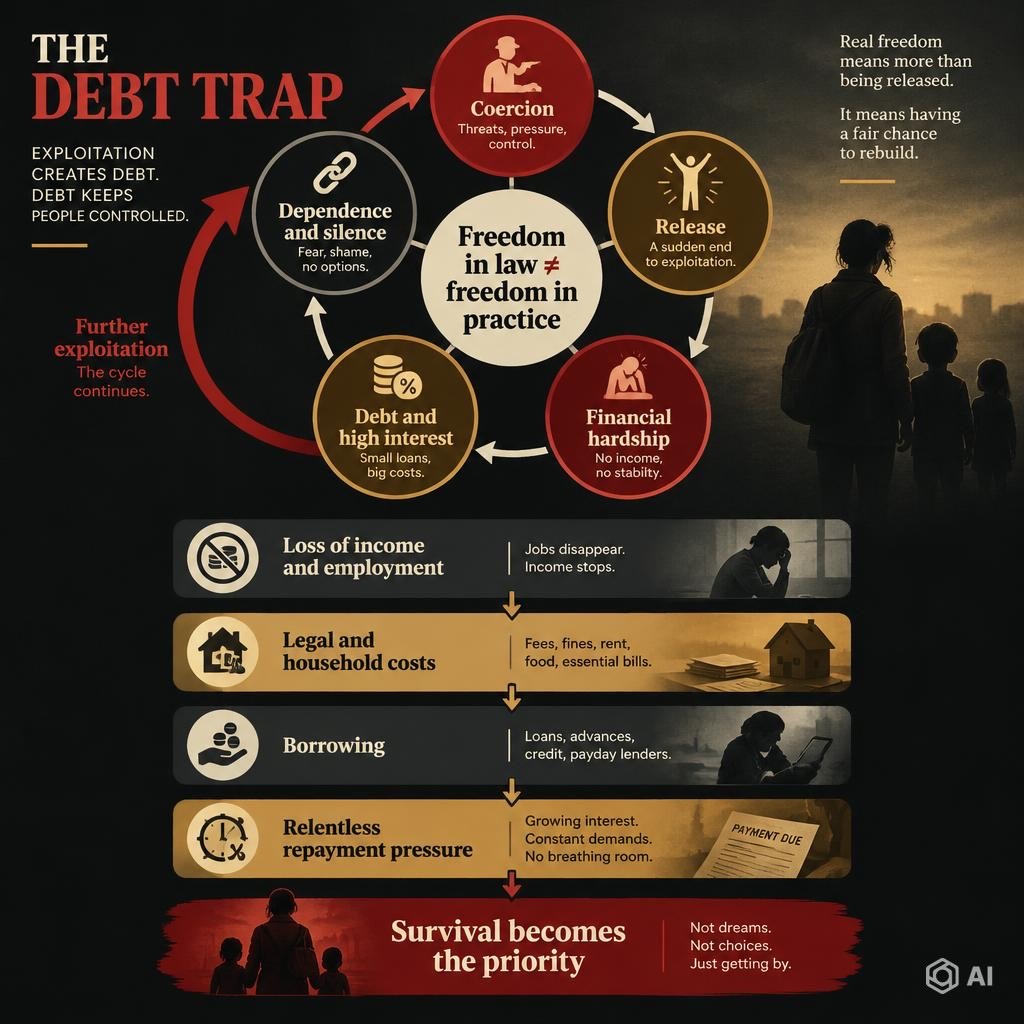
The coercion does not end when a person is released.
By then, the individual and their family may have lost income, employment, savings and social standing. Legal costs, transport, food and household expenses can create debts that take years to repay.
This is where the Debt Trap completes the cycle.
Families may borrow from relatives, informal lenders or financial institutions. High interest rates and relentless repayment demands can turn a temporary crisis into permanent hardship.
The person is no longer focused on rebuilding their life or seeking accountability. Survival becomes the priority.
Debt can prevent people from:
- challenging official misconduct;
- educating their children;
- accessing proper healthcare;
- starting a business;
- participating in public life;
- resisting further exploitation.
This creates a closed loop:
Fear produces compliance.
Coercion produces financial hardship.
Debt produces dependence.
Dependence prevents resistance.
Predatory lending is therefore not only a financial problem. In a weak justice system, it can become another instrument of social control.
The central question is not simply whether people are free in law, but whether they possess the financial security needed to exercise that freedom.
When survival becomes the only objective, independence becomes almost impossible.
#TheCoercionMachine #TheDebtTrap #HumanRights #EconomicJustice #RuleOfLaw #ThePyramidOfCoercion


Comments
Post a Comment