The Digital Frontier: Is Social Media Breaking the Silence?
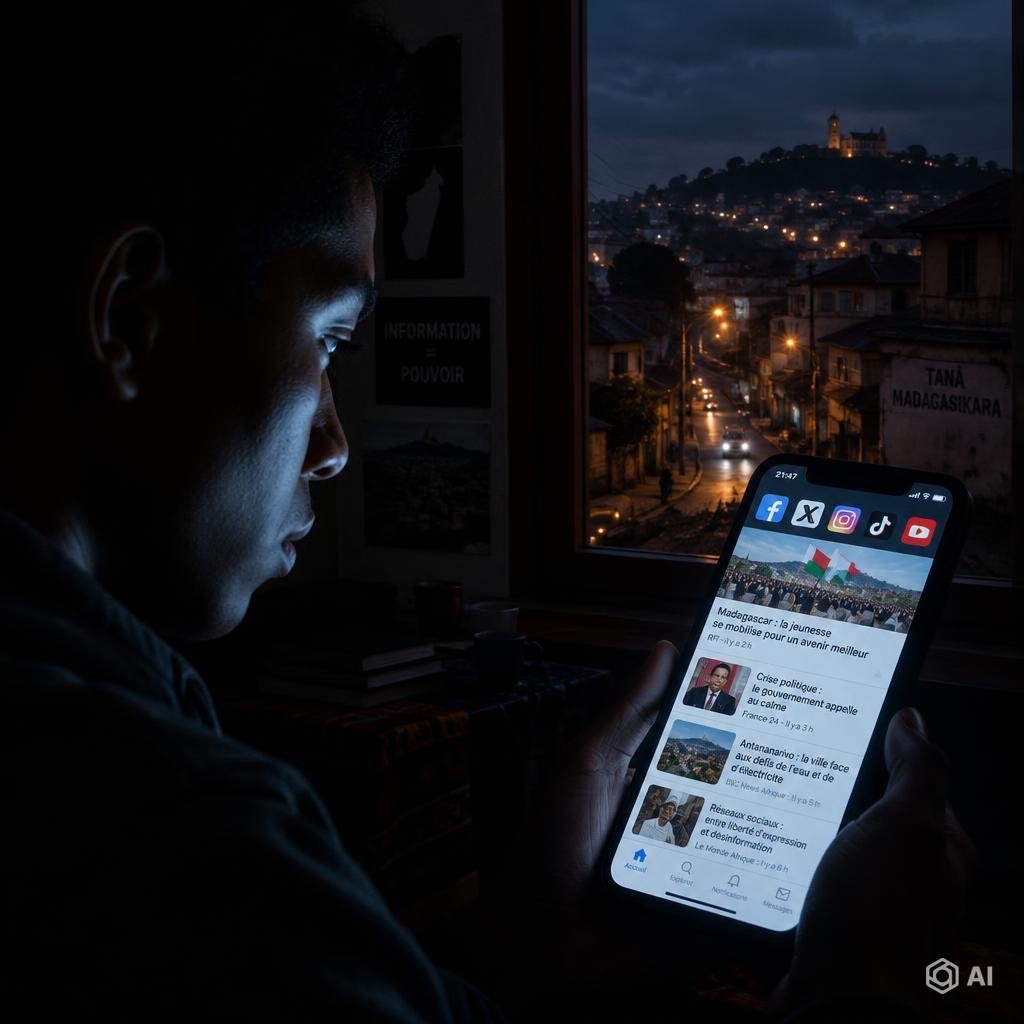
We looked at how traditional media in Madagascar is controlled through state broadcasting, elite ownership, and the "quiet" censorship of legal threats. But there is a new variable in this equation: Social Media.
For a long time, social media was viewed as the ultimate tool of Agency. It allowed citizens to bypass the "gatekeepers" of the traditional press, share videos of protests, and organize around issues that the state wanted to keep quiet. But as we have seen globally—and increasingly here in Madagascar—the state is not just watching; they are adapting.
The Two Faces of the Digital Space
1. The Tool of Agency: Social media has undeniably lowered the barrier to entry for truth-telling. When a student posts a video of a local injustice or a citizen shares a report on a missing person, they are exercising their agency. They are creating a record that the "official" media cannot ignore. This is the "Agency-First" potential of the digital age.
2. The Tool of Control: The state has realized that they don't need to ban social media to control it. Instead, they use three tactics:
* The Flood: Instead of banning a narrative, they flood the digital space with noise, disinformation, and distraction. If you can’t silence the truth, you make it impossible to hear.
* The "Knock on the Door": Digital surveillance is the ultimate deterrent. Because your digital footprint is permanent, the threat of future consequences creates a "chilling effect." People don't post because they aren't sure who is watching—and that uncertainty is a form of control.
* The Proxy Army: We’ve already discussed how foreign narratives are being imported into our media. Social media allows these narratives to be amplified by "bot" networks or paid influencers, making a foreign agenda look like a "grassroots" Malagasy movement.
The Rural Reality: The Digital Divide
While we talk about social media as a "frontier," we must remember that for much of rural Madagascar, this frontier is still closed.
If you are in a village with limited data access and a smartphone that is barely functional, your reality is still defined by the state-controlled radio. The "Digital Agency" we discuss is, for now, a luxury of the urban elite. This creates a dangerous gap: a country where the cities are beginning to debate the reality of their situation, while the rural heartland remains disconnected and subject to the state’s curated narrative.
The Question of Courage
Social media has made it easier to share information, but it has not made it safer. In fact, it has made the consequences more visible.
When we talk about Freedom of Speech, we aren't just talking about the right to post on Facebook. We are talking about the courage to exist in the digital space without fear.
As we move forward in this series, we have to ask: Is our digital space a place where we are building a shared reality, or is it just another layer of the "Hybrid" façade?


Comments
Post a Comment