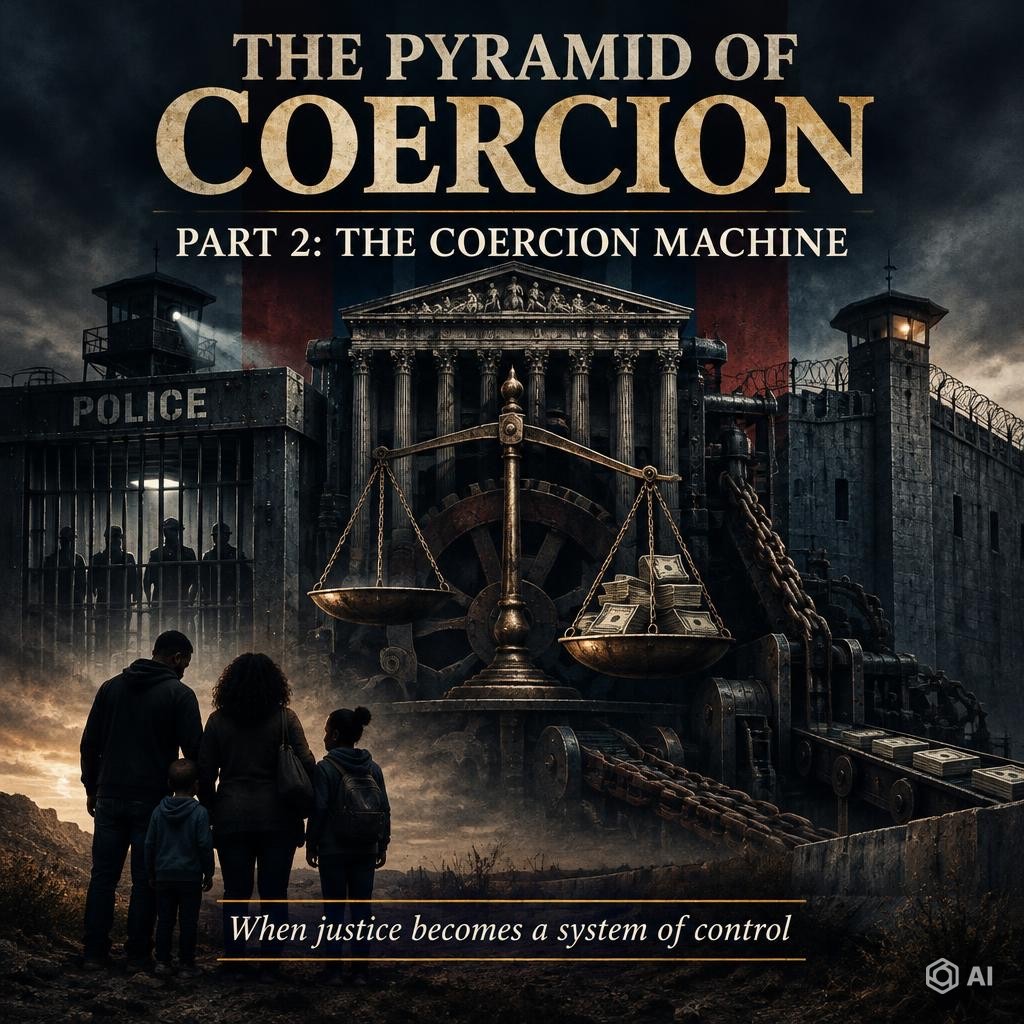
The Pyramid of Coercion Part 2: The Coercion Machine
In Part 1, we examined how fear of witchcraft and the occult can become an invisible wall—discouraging people from speaking openly, challenging authority or standing together.
Part 2 turns to a more visible system of control: the police, the courts and the prison system.
A functioning justice system should protect citizens from crime and defend the innocent. Arrest should be based on reasonable grounds, detention should be lawful and temporary, and every accused person should have access to a fair and timely hearing.
But when people are arrested without sufficient evidence, detained without charge, or held in overcrowded and degrading conditions, justice can become something very different. Freedom is turned into a commodity. Better food, safer accommodation, legal assistance and even access to the courts may depend on money.
The damage extends far beyond the individual. Families may be forced to borrow, sell property or abandon their livelihoods to support someone who has not been convicted of a crime. When the case eventually collapses for lack of evidence, the authorities may simply point to the absence of a conviction—while the family is left with debt, lost income and a destroyed reputation.
This raises a serious question:
Can a justice system become a business, even when it claims to serve the public?
England’s history provides important context. Prisons were once places of disease, hunger, corruption and overcrowding. Reformers exposed these conditions, and legal safeguards were gradually introduced. Yet even developed countries have struggled to prevent detention, imprisonment and legal processes from becoming instruments of poverty and social control.
The problem is not only individual corruption. It can also arise from a system in which every stage creates pressure: arrest, detention, legal representation, court fees, prison expenses and the long-term consequences of suspicion.
In this part of the series, we will examine how the Coercion Machine operates—and how a system intended to deliver justice can instead produce fear, exhaustion and financial dependence.
When freedom has a price, the poor are not merely disadvantaged.
They are placed under permanent control.


Comments
Post a Comment